Updated April 6, 2026
Every department in every business is tasked with cutting costs and maximizing efficiency today. Printing, an often-overlooked area of the workplace, can lead to significant hidden costs when left unmanaged. Managed Print Services (MPS) offer a solution that optimizes printer fleets, consolidates devices, and lowers the cost of ownership. By streamlining and modernizing print environments, businesses can realize substantial savings and operational improvements that go beyond paper and toner costs.
What is printer fleet management and how does it work?
Printer fleet management is the process of monitoring, managing, and optimizing all printing devices within an organization to improve efficiency, reduce costs, and streamline operations. It gives businesses full visibility into how printers are used, how they perform, and where inefficiencies exist.
Through printer fleet management, organizations can track print volumes, automate supply replenishment, and proactively maintain devices to prevent downtime. This data-driven approach helps right-size the print environment, ensuring the right number and type of devices are in place to meet actual business needs.
Often delivered as part of a broader managed print services (MPS) strategy, printer fleet management focuses specifically on the day-to-day oversight and optimization of your print infrastructure. This includes device monitoring, performance analysis, and ongoing adjustments to improve productivity.
By centralizing control and improving visibility, printer fleet management reduces maintenance costs, enhances security, and ensures your print environment runs as efficiently and cost-effectively as possible.
Five ways printer fleet management maximizes uptime and minimizes waste
When devices are scattered across departments without a cohesive strategy, they often become liabilities rather than assets. In a poorly managed fleet, devices tend to break down more frequently, require constant restocking of supplies, and, in many cases, remain underutilized. A well-managed printer fleet, however, is monitored and optimized to ensure that each device serves a purpose, operates reliably, and doesn’t create unnecessary security risks or expenses.
1. Predictive maintenance and proactive monitoring
Through MPS, companies benefit from proactive printing services, ensuring devices remain operational and are repaired before problems become critical. Managed print providers are now incorporating AI-driven diagnostic tools to anticipate issues such as parts due for replacement, low toner, or hardware malfunctions. When issues are detected, the provider either dispatches a technician or delivers necessary supplies, saving the business both time and money. This proactive approach to maintenance maximizes uptime, reducing productivity losses associated with out-of-order printers. Industry estimates are that organizations see a 15-20% reduction in downtime through proactive and predictive maintenance.
2. Streamlining costs with predictable monthly billing
Managed print providers often offer monthly service packages covering maintenance, consumables, and support, eliminating unexpected repair and supply expenses. This predictable billing structure helps organizations allocate budgets more effectively. Additionally, businesses gain access to usage data that identifies printing patterns, enabling them to spot areas of high usage, eliminate redundancies, and introduce cost-saving measures.
3. Device consolidation for better efficiency
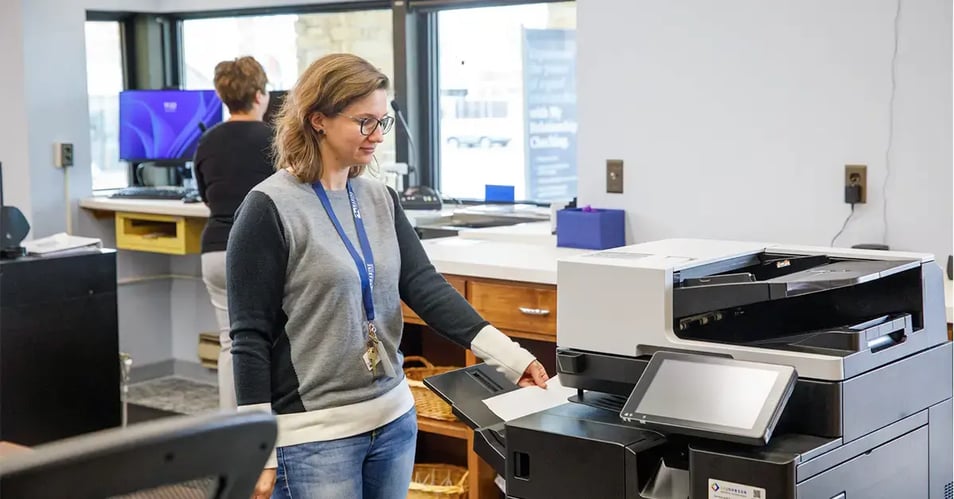
Over time, companies often accumulate a mix of printers, copiers, and scanners from different manufacturers with varying capabilities. This patchwork approach to device acquisition often results in duplicated functionality and unnecessary expenses. Fleet right-sizing and consolidation reduces the number of printers and copiers by centralizing functionality into fewer, more efficient multifunction devices (MFDs). An MFD can serve as a printer, scanner, copier, and fax machine, fulfilling various needs in a single device. Reducing the number of individual devices eliminates associated costs such as power consumption, maintenance, and the purchasing of multiple types of toners and paper. A streamlined printer fleet also reduces the physical footprint of devices, which can help smaller offices gain workspace.
4. Enhancing security with a cohesive print environment
A consolidated print environment is fundamental for a modern, secure workplace. With fewer devices to manage, IT teams can more effectively control access, implement strong authentication protocols, and ensure all printers comply with rigorous security standards.
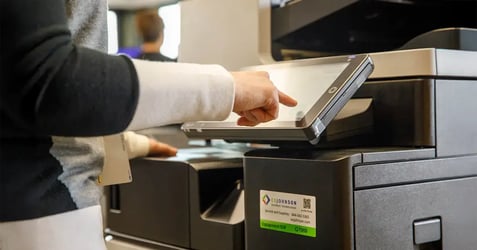
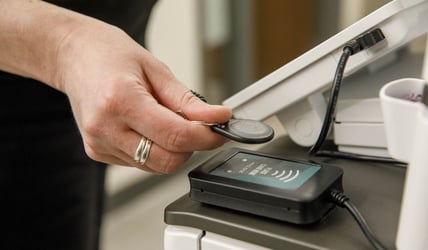
This streamlined infrastructure makes it possible to adopt a Zero Trust Print Architecture, a security framework that assumes no device or user is automatically trusted and instead requires identity-centric authentication for every interaction with the print environment. Features such as print release, where users must authenticate before retrieving print jobs, help prevent unauthorized access to sensitive documents. Through identity-based controls, consolidated fleets not only protect information at the device level but also safeguard the entire organizational network from cyber threats like unauthorized access, malware, and ransomware attacks. By integrating Zero Trust principles, organizations minimize the risk of breaches, meet compliance requirements, and reduce the financial risks associated with breaches and regulatory fines.
5. Empowering the smart workplace with AI-driven document workflows
Modern multifunction printers (MFDs) are no longer just output devices. They are intelligent workflow facilitators at the heart of the smart workplace. By layering in advanced applications and AI-powered document processing capabilities, printers can automatically scan, categorize, and route documents to digital repositories, cloud apps, or even AI agents for further analysis. This seamless integration bridges the gap between physical paperwork and digital workflows, enabling hybrid and remote teams to access critical information securely from anywhere. By transforming traditional documents into actionable digital data, smart printers help organizations boost productivity, streamline collaboration, and ensure information flows effortlessly across distributed teams.
How printer fleet management lowers your printer total cost of ownership (TCO)
Printer fleet management and device consolidation play a critical role in reducing the total cost of ownership (TCO) for your printing environment. By taking a strategic, data-driven approach to managing devices, businesses can eliminate redundant equipment, right-size their fleet, and ensure each device is used efficiently.
Over time, these efficiencies add up and result in predictable expenses, fewer hidden costs, and significant long-term savings. By optimizing both the number and performance of devices, printer fleet management turns a traditionally overlooked expense into a controllable and cost-effective part of your business operations.
Sustainability, ESG reporting, and printer fleet management
Printer fleet management supports your organization’s sustainability efforts and ESG (Environmental, Social, and Governance) goals in several ways. Reducing the number of devices means lower power consumption, contributing to both cost savings and a reduced carbon footprint. Newer MFDs are often more energy-efficient, using advanced technology to enter low-power modes during inactivity and quickly resume operations when needed. Energy efficiency can translate into support of your ESG goals and significant long-term savings on utility bills which directly benefit the bottom line.
Frequently asked questions about printer fleet management
Below are answers to some of the most commonly asked questions about printer fleet management, designed to help you better understand its benefits, implementation, and impact on your organization.
Partnering with the right managed print provider for maximum impact
The first step in right-sizing your printer fleet is to choose the right managed print provider. An effective managed print provider offers comprehensive fleet assessments, device monitoring, and a consultative approach to help tailor solutions for each client’s unique needs. When selecting a provider, businesses should prioritize partners with a proven track record in printer fleet management, reliable support services, and strong data security measures.
EO Johnson’s team of expert industry professionals can develop a total print management strategy for your organization’s printing, scanning, faxing, and mobile computing needs. Let’s work together to proactively minimize downtime and improve your bottom line. Contact us today.