The sales kickoff is Monday. The agenda booklets are approved, but the print shop needs five business days, and the office printer jams every time someone loads cover stock.
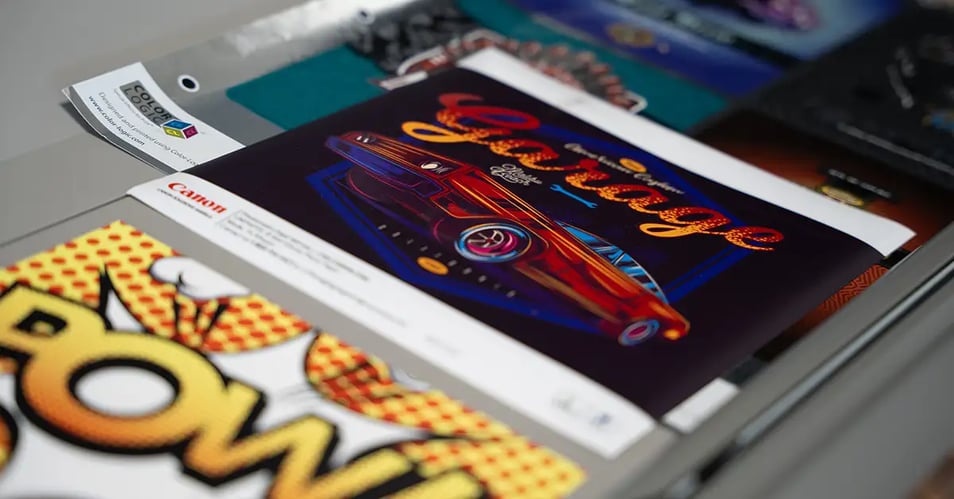
Most marketing delays don't come from the work itself. They come from waiting on a vendor's queue, on shipping, or on a reprint because the color came out wrong. Production print systems shorten that wait by putting reliable, professional-quality printing inside your own building.
How do production print systems reduce marketing job delays?
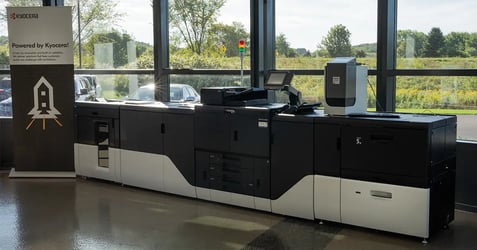
Production print systems are commercial-grade printers built for higher volumes, heavier stock and finished pieces like booklets. Production printers for marketing teams cut delays in three ways: jobs print on your schedule instead of a vendor's, pieces come off the press finished and ready to use, and consistent quality means fewer reprints.
Where marketing print jobs get stuck
- Vendor queues. Outsourced jobs wait for an opening in someone else's schedule, then add proofing and shipping time.
- Office printer limits. Standard office printers jam on cardstock, can't produce finished booklets, and slow down on long runs.
- Reprints. Color that shifts from one batch to the next, or a typo found after delivery, restarts the clock.
- Last-minute changes. A new date, logo or offer means a new order and a new wait.
How production print speeds up marketing turnaround
With in-plant printing, print job turnaround time depends on your team's schedule, not a vendor's.
- Print when the file is ready. No quotes, no queue, no shipping. A corrected sell sheet can be back in a sales rep's hands the same day.
- Finished pieces, not stacks of paper. Inline finishing handles stapling, folding, and booklet printing as part of the run, so no one spends an afternoon assembling by hand.
- Specialty media and cardstock that run reliably. Postcards, covers, and heavier stock feed cleanly, so jobs don't stall on jams.
- High-volume printing without the bottleneck. Long runs finish quickly and don't tie up the printers the rest of the office relies on.
How production print controls print production costs
Speed is the benefit your marketing team notices first. Cost control is the one finance notices.
- No rush fees. When the deadline is tight, you print it yourself.
- Print only what you need. Short runs make sense, so you stop ordering 5,000 brochures to hit a price break and recycling half of them when the content changes.
- Fewer reprints. Consistent color and reliable feeding cut the waste from jobs that come out wrong.
- Predictable cost per page. You know what a job costs before you print it.
Savings depend on your volume and the jobs you bring in-house. A quick way to estimate them is to compare a few months of outsourced print invoices against the cost of running that same work internally.
Is in-house production print right for your team?
It's worth a closer look if:
- You outsource the same kinds of jobs every month.
- Rush fees show up regularly on print invoices.
- Your office printers can't handle the stock or finishing techniques your team asks for.
- Reprints or color mismatches keep delaying launches.
For a side-by-side look at specific systems, see our guide to in-plant printing solutions for marketing teams.
Frequently asked questions on production print systems for marketing
See what your team could print in-house
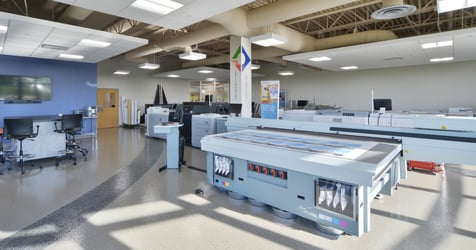
Bring a job you outsource today to our Customer Experience Center in Eau Claire, Wisconsin, and watch it come off the press. Schedule a visit and our production print team will walk you through your options.